 Oct 24 2026
 Oct 17 2026
 Oct 10 2026
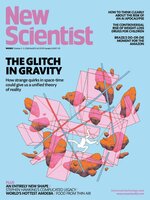 Oct 03 2026
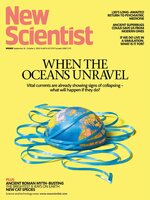 Sep 26 2026
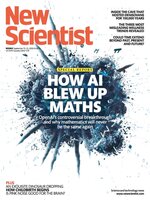 Sep 19 2026
 Sep 12 2026
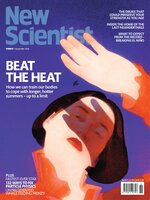 Sep 05 2026
 Aug 29 2026
 Aug 22 2026
 Aug 15 2026
 Aug 08 2026
 Aug 01 2026
 Jul 25 2026
 Jul 18 2026
 Jul 11 2026
 Jul 04 2026
 Jun 27 2026
 Jun 20 2026
 Jun 13 2026
 Jun 06 2026
 May 30 2026
 May 23 2026
 May 16 2026
New Scientist covers the latest developments in science and technology that will impact your world. New Scientist employs and commissions the best writers in their fields from all over the world. Our editorial team provide cutting-edge news, award-winning features and reports, written in concise and clear language that puts discoveries and advances in the context of everyday life today and in the future.
When to stop? • Why the healthcare industry isn’t built for coming off medication
New Scientist
Most direct sign of dark matter yet • Dark matter’s secrets could be unlocked by a peculiar gamma-ray signal in three galaxy clusters – or it may reveal a more exotic phenomenon, finds Karmela Padavic-Callaghan
Deadly emerging tick viruses are spreading in the US
Supercentenarians have hypervigilant immune systems
We’ve underestimated global warming • Official projections for how much the world will warm are already catastrophic – and now it appears the world may warm by 25 per cent more than they suggest, finds Michael Le Page
Melted ice from Greenland is intensifying European heatwaves
How close are cancer vaccines? • A personalised mRNA cancer vaccine has produced positive results in a final-stage trial involving skin cancer, raising hopes for the approach, discovers Michael Le Page
We may now know which neurons dictate when it is time to go to sleep
Why AI watermarks won’t work • AI companies have begun watermarking their models’ outputs to improve transparency and tackle misinformation – but the approach has limitations, reports Matthew Sparkes
Did humans really evolve to be active only in the day?
Newly discovered immune hubs may keep our brain healthy
Cookies made from plastic bottles could reduce waste
Female clones of a male mouse • A gene-editing tool can reliably turn male mouse embryos into healthy females – a feat that could be valuable for conservation, finds Chris Simms
Trial to avoid contrails set to take off • Air traffic controllers will use AI-generated forecasts to advise planes flying over the Atlantic to adjust their altitude in an effort to reduce the climate impact of contrails, reports Madeleine Cuff
AI could help design more efficient plane wings
A 30-year mystery over lost neutrinos may have been solved
Older women reap major benefits from lifting heavy weights
Suggesting that ADHD is a myth is pseudoscientific and dangerous • ADHD is a real condition. An ill-informed documentary that suggests it is a modern, social construct could cause harm, says Caroline Williams
Our upper limit • How long could we possibly live? A recent study has it verging on two centuries – but Graham Lawton finds reason to be sceptical
The Void Ages • When we put our art into AI models, we risk losing our cultural history to auto-generated works. We must save human writing to avoid creating this void, says Annalee Newitz
Snap!
Three more recommendations about time
Travelling through time • If you want to know more or less everything there is to know about time, then this excellent – and extremely meaty – book is for you, says Joshua Howgego
New Scientist recommends
Is the banana about to split? • We love bananas, but without serious technical efforts, the crop faces collapse worldwide. James Woodford enjoys a passionate plea
A grim future • We had a mixed response to The Dogs Stars, a post-apocalyptic novel that will soon hit our cinema screens, says Alison Flood
What we are reading in September
Your letters
Poking holes in reality • Irrational numbers have long underpinned quantum mechanics. Removing them could eliminate its weirdest features, discovers Karmela Padavic-Callaghan
The...